


Types of Goods Transported by Sea
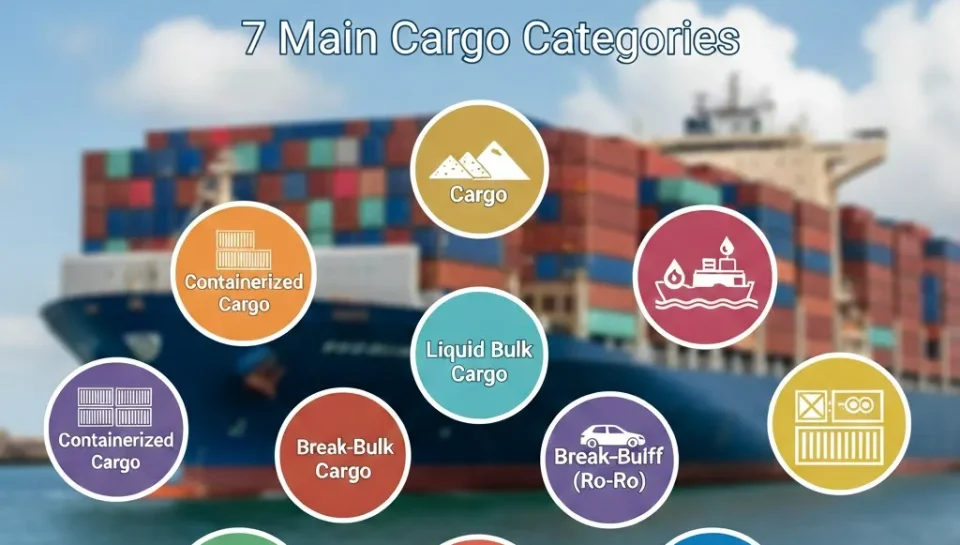
7 Main Cargo Categories
Sea freight plays a vital role in international trade, handling around 80% of global goods movement. For Egypt, with strategic ports like Alexandria, Damietta, and Ain Sokhna, maritime shipping is the backbone of both exports and imports. From agricultural products and fertilizers to machinery and LNG, different types of goods transported by sea drive the national economy.
In this guide, we’ll explore the main types of sea transport, examples from the Egyptian market, and best practices for handling each cargo category safely and efficiently.
What Are the Main Types of Goods Transported by Sea?
MSL shipping handles a diverse range of goods classified by how they are packed, stored, or handled. The two types of goods transported by sea most commonly recognized are bulk cargo and containerized cargo, but there are also specialized categories like liquid, perishable, or hazardous materials.
| Cargo Type | Description | Common Examples |
| Bulk Cargo | Shipped unpacked in large quantities | Grain, coal, cement |
| Containerized Cargo | Goods packed in containers (20ft/40ft) | Electronics, textiles |
| Special Cargo | Requires special handling | Vehicles, chemicals, livestock |
Knowing these distinctions helps importers and exporters choose the right types of sea transport and comply with international regulations such as Incoterms 2020 and IMO guidelines. To better understand how vessel categories differ by design and function, check our related guide on [How to Use Vessel Finder Marine Traffic for Efficient Maritime Shipping Tracking]
Perishable and Food Products – The Most Sensitive Goods Transported by Sea
Among the types of goods transported by sea, perishable items are the most temperature-sensitive. Egypt exports significant quantities of oranges, grapes, strawberries, and frozen fish to European and Gulf markets.
- Ships Used: Reefer ships (refrigerated vessels) or temperature-controlled containers.
- Main Ports: Alexandria, Damietta, Port Said.
- Key Tip: Maintain the cold chain from farm to vessel to preserve freshness.
Unlike what goods are transported by air, sea transport for perishable cargo is cost-effective for bulk quantities, though slower. Exporters should use data loggers and reefer monitoring systems to ensure temperature stability. You can also read how these goods are managed onboard in our detailed post on [Cargo Loading and Unloading Procedure in Ships].
Liquid Bulk and Gas-Based Fuels – Energy at Sea
A major portion of Egypt’s exports is made up of liquid bulk such as oil derivatives and LNG (Liquefied Natural Gas) from Ain Sokhna terminals.
Types of liquid cargo include:
- Crude oil and petroleum products
- Chemicals and solvents
- LPG, LNG, and CNG fuels
Types of vessels:
- Tankers: Carry liquid bulk oil.
- Gas carriers: Specialized for LNG and LPG.
Safety measures:
Following IMO safety codes is critical, as these products are hazardous and flammable. Egyptian ports have strict procedures for loading and unloading under supervision of the Egyptian Petroleum Authority. Learn how Incoterms affect ownership and risk during such shipments in our article [Incoterms for Sea Shipment].
Livestock and Animal Transport by Sea
Transporting live animals is another specialized category among the types of goods transported by sea. Egypt exports cattle, camels, and sheep mainly to Saudi Arabia, Jordan, and Sudan through designated livestock vessels.
Features of Livestock Ships:
- Equipped with feeding systems and water supply lines.
- Ventilation and waste management systems.
- Veterinary inspection zones onboard.
To comply with animal welfare standards, carriers follow OIE and IMO regulations ensuring animals are not stressed or injured during transit. Egyptian veterinary authorities inspect animals before departure to issue health certificates. For those interested in the full logistics chain, see how this process fits within broader maritime operations in [How Does Sea Shipping Work].
Dry Bulk Cargo – Essential Commodities for Industry
Dry bulk cargo represents some of the largest types of goods transported by sea to Egypt. These goods are unpackaged and loaded directly into a ship’s hold.
Main dry bulk imports to Egypt:
- Wheat and maize: For Egypt’s large food industry.
- Phosphate and fertilisers: For export.
- Cement and clinker: For construction.
| Commodity | Import/Export | Handling Port |
| Wheat | Import | Damietta |
| Phosphate | Export | Safaga |
| Clinker | Import | Alexandria |
Because these goods are loose, free surface effect (movement of cargo affecting ship stability) is a key concern. Shippers use bulk liners, hatch covers, and trimming to maintain safety.
For reliable handling, storage, and international transport of dry or bulk cargo, our company offers professional [Ocean Freight Services] designed to meet the needs of Egyptian exporters and importers. From customised routes to full-container or break-bulk solutions, we ensure your cargo reaches global markets safely and efficiently.
Vehicle and Machinery Transport – The Role of Ro-Ro Ships
When discussing what 7 types of cargo ships are, one major category is Ro-Ro (Roll-on/Roll-off) ships. These are designed for vehicle and heavy machinery transport, allowing wheeled cargo to drive directly onto the vessel deck.
Typical cargo includes:
- Passenger cars (imports from Europe and Asia)
- Construction equipment
- Industrial machinery
Challenges for Egyptian importers:
- Customs clearance and documentation delays.
- High port handling charges.
- Insurance for high-value machinery.
Ro-Ro operations mainly pass through Alexandria and Port Said ports, which have specialised terminals for such cargo. If you are shipping large or heavy machinery, discover the [Cheapest Way to Ship Heavy Items Internationally] for cost optimization.
Chemical, Hazardous, and Toxic Products
Chemical cargoes require the strictest safety protocols among the types of goods transported by sea. Examples include paints, solvents, acids, fertilisers, and industrial gases.
Documents Required for Hazardous Cargo:
- Material Safety Data Sheet (MSDS)
- Dangerous Goods Declaration (IMDG Code compliance)
- Import/export licenses
Egyptian Regulations:
The Egyptian Environmental Affairs Agency (EEAA) and the Ministry of Transport regulate hazardous shipments, following IMO’s MARPOL and SOLAS conventions.
Safety Tips:
- Always label containers correctly.
- Use certified packaging materials.
- Conduct pre-shipment inspections.
Need a professional partner for regulated cargo? You can [Request a Shipping Quote] from certified freight forwarders to ensure compliance and safety.
How Egyptian Ports Handle Different Cargo Types
Egypt’s strategic location connects Africa, Asia, and Europe, making it a key maritime hub. Each port specializes in specific types of goods transported by sea depending on its facilities.
| Port | Specialization | Example Cargo |
| Alexandria Port | Containerized & foodstuff | Textiles, fruit, vehicles |
| Damietta Port | Bulk and industrial goods | Wheat, fertilizers |
| Ain Sokhna Port | LNG & liquid fuels | Gas exports |
| Safaga Port | Mineral & phosphate exports | Mining materials |
Modernisation projects under the Suez Canal Economic Zone (SCZone) have improved cargo handling capacity and customs processes, encouraging more global trade. shipping lines to operate in Egypt.
Comparison: What Goods Are Transported by Air vs. Sea?
While goods transported by air include lightweight, high-value items like electronics or medical supplies, sea freight is best for large-volume, heavy, or non-urgent goods.
| Transport Mode | Best for | Cost | Speed |
| Air Freight | Small, valuable goods | High | Fast |
| Sea Freight | Bulk, industrial cargo | Low | Slower |
Egyptian exporters often combine both modes strategically, sending urgent samples by air, and full loads by sea. For insight into choosing the right shipping mode and optimizing cost per ton, read [How Does Sea Shipping Work]
Conclusion: Choosing the Right Type of Sea Transport for Your Cargo
Understanding the types of goods transported by sea helps Egyptian traders optimize shipping costs, ensure compliance, and select the right types of sea transport for their business needs.
Whether exporting perishable fruits, machinery, or chemicals, each cargo type has its own vessel requirements, documentation, and safety protocols.
By working with licensed freight forwarders and using Egyptian ports efficiently, businesses can expand their international reach safely and profitably. Ready to start your next shipment? [Request a Shipping Quote] today and get personalized sea freight solutions tailored to your cargo type.
FAQ
Why is sea freight preferred for bulk cargo?
It’s the most cost-effective and efficient way to move large, heavy, or low-value goods like grain, coal, and cement over long distances. Ships can carry massive volumes that would be too expensive by air or land.
What goods are not suitable for sea transport?
Goods that are highly perishable, fragile, or time-sensitive, such as fresh flowers, urgent medical supplies, or luxury electronics, are not suitable for sea transport due to longer transit times.
What type of goods can be transported on the seas?
Almost all types of goods can be transported by sea, including containers, bulk materials (grain, coal, cement), liquids (oil, gas), vehicles, machinery, chemicals, livestock, and perishable food products.